

Let’s talk money.
After five years of building websites and running my agency Cyprogram, I’ve landed on a website pricing guide that actually works not just for my bottom line, but for delivering real value to clients. I charge anywhere from $500 to $2,000 per website, and no, that’s not arbitrary. Every dollar is tied to specific deliverables, complexity, and the outcome I’m delivering.
Here’s the truth nobody talks about: most website pricing guides are either too vague (“it depends on your needs”) or wildly inflated to make developers seem more prestigious. I’m going to break down exactly what you get at each price point, why I charge what I charge, and the expensive lessons I learned about underpricing my work.
If you’re a business owner trying to figure out what a website should cost, or a developer struggling to price your services without feeling like a fraud, this website pricing guide is for you.
Why Most Website Pricing Guides Are Garbage
Before I share my pricing breakdown, let me tell you why most website pricing advice online is useless.
They’re too generic. Articles that say “a basic website costs $1,000-$5,000” tell you nothing. What’s basic? Five pages? Twenty? Does it include e-commerce? SEO? Custom animations?
They hide the numbers. Developers love to say “it depends” and then never give actual figures. That’s not helpful for clients budgeting or developers trying to benchmark their rates.
They ignore hourly reality. A $3,000 website sounds impressive until you realize it took 100 hours and you made $30/hour. That’s not sustainable, especially when you factor in taxes, tools, and admin time.
My website pricing guide is different because I’m giving you real numbers from real projects—what clients paid, what they got, and how long it actually took me.
My Website Pricing Guide: The Three Tiers
I work in three main pricing tiers: $500 for starter sites, $800-$1,500 for semi-custom builds, and $2,000+ for fully custom projects. Let me break down each one.
Tier 1: $500 Websites (The Professional Launch Pad)
What’s included:
- Up to 5 pages (typically home, about, services, blog, contact)
- Responsive design that works on mobile, tablet, desktop
- Basic SEO setup (meta titles, descriptions, alt tags, sitemap)
- Contact form with email notifications
- Social media integration (links, maybe an Instagram feed)
- Guidance on hosting and domain setup
- 1-2 small revisions after launch
What’s NOT included:
- E-commerce functionality
- Ongoing maintenance or updates
- Complex custom features or integrations
- Content creation or copywriting
- Advanced animations or interactions
Real examples:
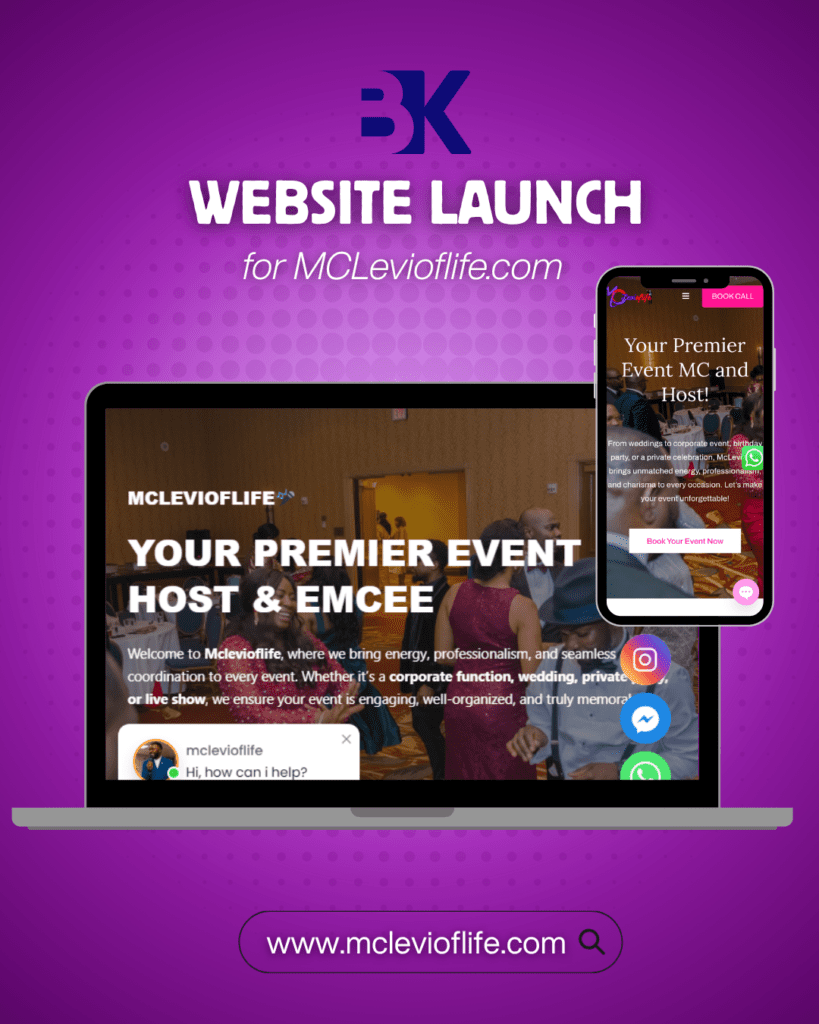
I built a four-page WordPress site for an event mc and host that included a homepage, services page, gallery, and contact page with booking integration and Google Maps embed. Clean, mobile-friendly, and live in two weeks. $500.
I also created a five-page site for a Foundation home, about, programs, blog setup, and contact with Instagram feed integration. Simple, professional, and easy for her to update blog posts herself. $1000.
Time investment: These projects typically take me 10-15 hours, which works out to roughly $35-$50 per hour after accounting for admin work like emails, revisions, and setup.
Who this is for: Small local businesses, solopreneurs, and anyone who needs a functional online presence without bells and whistles. It’s a launch pad you get online fast, look professional, and can grow from there.
Tier 2: $800-$1,500 Websites (The Sweet Spot)
This is where most of my client work lands. It’s the middle ground between basic and fully custom you get polish, personality, and light integrations without enterprise-level complexity.
What’s included:
- 6-8 pages with more content structure
- Stronger branding alignment (custom colors, fonts, imagery strategy)
- Better animations and motion effects (scroll effects, hover states, transitions)
- Light integrations like email newsletter signup, booking tools, or simple e-commerce
- Mobile optimization and performance testing
- 2-3 revision rounds
Real examples:
I built a yatcht rental website with menu pages, online reservation integration, Instagram feed, and a contact form with hours and location map. The design matched their branding and included subtle animations that made the site feel alive. $1,200.

Another project was a personal brand portfolio for a cyber security specialist homepage, about, services, case studies, blog setup, and email signup form. Clean, professional, and optimized for lead generation. $900.

Time investment: These take 20-30 hours, putting my effective rate at around $40-$60 per hour depending on complexity.
Who this is for: Small businesses that want to stand out, professionals building a personal brand, or anyone who needs more than a basic site but doesn’t require heavy custom development.
This tier is the sweet spot for most clients polished enough to convert visitors, affordable enough to justify the investment.
Tier 3: $2,000+ Websites (Fully Custom Builds)
This is where I go all-in. These aren’t template sites they’re custom-built for performance, scalability, and brand polish.
What’s included:
- Up to 10 pages (sometimes more depending on scope)
- Advanced SEO optimization (schema markup, speed optimization, keyword strategy)
- Custom animations and interactions tailored to the brand
- CMS integration for easy content updates by the client
- API or third-party integrations (payment systems, booking platforms, CRMs)
- Design strategy sessions before we build anything
- Responsive testing across devices and browsers
- Post-launch support (typically 2 weeks of tweaks and fixes)
Real examples:
I built a real estate website with property listings pulled from an API, map-based search filters, contact forms on every listing, and an admin dashboard for the client to manage properties. Fully responsive, fast-loading, and designed for conversions. $2,000.
Another project was a fitness subscription platform with member login, progress dashboards, workout libraries, and Stripe payment integration for monthly subscriptions. This required custom backend work, security considerations, and ongoing testing. $2,200.
Time investment: These projects take 40-50 hours (sometimes more), which puts my effective rate at $60-$70 per hour higher because I’m not just coding, I’m strategizing, designing, and problem-solving.
Who this is for: Startups, growing businesses, or anyone who needs a website that directly supports revenue. These clients understand that a great website is an investment, not an expense.
What Actually Affects Website Pricing (Beyond Complexity)
Here’s my honest website pricing guide for the factors that move the needle beyond just page count and features:
Timeline urgency: Need it in a week instead of a month? That’s a 20-30% rush fee because I’m prioritizing your project over others.
Content readiness: If you hand me all copy, images, and brand assets organized and ready, the project moves faster. If I’m waiting on you for two weeks between every milestone, that adds time and cost.
Revision rounds: My pricing assumes 2-3 revision rounds. If you want unlimited tweaks, that’s a different price structure (usually retainer-based).
Integrations: Every third-party tool adds complexity Stripe, Calendly, Mailchimp, CRMs. Simple embeds are free; custom API work costs more.
Hosting and setup: If I’m handling domain purchase, DNS setup, SSL certificates, and hosting configuration, that’s included in my pricing. If you’ve already got hosting, cool but if it’s a mess, I charge extra to clean it up.
Copywriting and content creation: I don’t write your website copy unless we explicitly agree on it (and that’s usually an add-on). I can edit and optimize what you give me, but full content creation is a separate service.
The more done-for-you the project, the higher the price. Clients who are organized, responsive, and clear about their vision get better pricing because the project runs smoother.
My Biggest Pricing Mistake (And How I Fixed It)
Early on, I massively undercharged because I was desperate to land clients and build a portfolio. I thought lowball pricing would help me compete, but it almost killed my business.
The project that taught me this lesson was a $400 boutique store website that should’ve been straightforward five pages, contact form, Instagram feed. Done, right?
Wrong.
The client kept asking for “small tweaks” another page here, extra features there, more revisions. By the end, I’d added:
- Two extra pages
- A product showcase section (basically light e-commerce)
- Custom CSS animations they saw on another site
- Four rounds of revisions instead of two
I spent triple the hours I’d budgeted and barely covered my costs after tools and time. Worse, I’d trained this client to expect free work because I never pushed back.
Here’s what I learned:
Clarity upfront matters as much as skill. Now every project starts with a detailed scope document that lists exactly what’s included page count, features, revision limits, timeline. Anything outside that scope triggers a change order with additional pricing.
Undercharging doesn’t just lose money; it trains clients to undervalue your time. When you charge too little, clients assume the work isn’t valuable and treat you accordingly.
Scope creep is a contract problem, not a personality problem. I’m not “being difficult” by saying no to free extra work I’m protecting the project timeline and my business.
Now I use a 50/50 payment structure: half upfront before I start, half on completion before the site goes live. I’ve been burned once by a client who ghosted after final delivery, so I don’t hand over final files or launch the site until payment clears. I host previews on a private subdomain so clients can see progress, but nothing goes live until I’m paid.
This isn’t harsh it’s professional. Clients who respect your process pay on time. Clients who push back on basic payment terms are red flags.
How to Price Your Own Website Projects (My Framework)
If you’re a developer building your own website pricing guide, here’s the framework I use:
1. Calculate your minimum hourly rate. What do you need to make per hour to cover your expenses, taxes, and profit? For me, it’s around $50/hour minimum after overhead.
2. Estimate hours realistically. A five-page site might seem like 8 hours of work, but add client communication, revisions, testing, and deployment it’s closer to 15 hours.
3. Add a complexity multiplier. Simple WordPress site? Base rate. Custom React app with API integrations? 1.5x to 2x the base rate.
4. Factor in value, not just time. A $2,000 website that generates $50,000 in revenue for a client is a steal. Price for the outcome, not just the hours.
5. Build in a buffer. Every project has unexpected issues scope creep, technical problems, slow client feedback. Add 10-20% buffer time to your estimate.
My controversial take? Clients pay for outcomes, not code. I’d rather deliver a $2,000 no-code Webflow site that converts visitors into customers than a $4,000 hand-coded masterpiece that nobody updates. Clean design and usability beat technical flex every single day.
Different Clients, Different Pricing
Here’s how client types typically map to my pricing tiers based on hundreds of projects:
Small local businesses ($500-$1,000): Hair salons, cafes, gyms, consultants. They need something simple, fast, and functional to show up in Google searches and give customers basic info.
Startups ($1,500-$2,000+): These clients need scalability, integrations, and a site that can grow with them. They’re often tying the website directly to their business model, so quality and performance matter.
Individual professionals ($800-$1,500): Coaches, freelancers, creatives. They’re focused on personal branding, lead capture, and looking polished without heavy backend complexity.
Industries that pay more: Tech, real estate, fitness, and e-commerce clients generally pay more because their websites are directly tied to revenue or credibility. A real estate agent knows a good site means more leads. A fitness coach knows a polished site means more clients.
Industries that prioritize cost: Community organizations, nonprofits, and creative professionals often have tighter budgets and prioritize function over flash.
I don’t judge either approach I just price accordingly and make sure expectations align from the start.
Preventing Scope Creep (And Keeping Projects Profitable)
Scope creep is the silent killer of profitable projects. Here’s how I prevent it:
1. Define deliverables in writing. Every contract includes a detailed scope: number of pages, features, revision rounds, timeline.
2. Set revision limits. I include 2-3 rounds of revisions in my base pricing. After that, additional revisions are billed at my hourly rate.
3. Use change orders for new requests. If a client asks for something outside the original scope—extra pages, new features, integrations I send a change order with updated pricing and timeline.
4. Communicate proactively. When a client asks for something extra, I don’t just say yes. I explain how it impacts timeline and budget, then give them the choice.
Real example: I had a $700 restaurant website that started ballooning when the client kept adding “small tweaks”—extra pages, new menu sections, an online ordering form. It doubled my workload. Now that client would’ve received a change order the moment they requested the online ordering system, with clear additional pricing.
Scope creep isn’t a client problem it’s a boundaries problem. Clients will push as far as you let them. Set clear limits upfront and enforce them professionally.
Tools I Use (And What They Cost)
Here’s my honest breakdown of the tools that support my website pricing model:
- Figma (Free for solo use): All design work and client mockups
- Webflow ($14-$42/month per site): For no-code client builds that need CMS functionality
- WordPress (Free, hosting varies): Still my most common platform clients love it
- Hostinger ($2-$10/month): Where I host most client WordPress sites
- Supabase (Free tier, paid starts at $25/month): For database and backend needs on custom projects
- Vercel (Free for personal projects): Deployment for React/Next.js builds
Total tool cost per project: Usually $20-$50 depending on platform. I factor this into my pricing but don’t bill it separately unless it’s a large recurring cost like premium plugins.
Pro tip: I don’t overbuy tools. Early on I wasted $50/month on Adobe Dreamweaver thinking it would make me more professional. The auto-generated code was garbage and I never used half the features. Now I only pay for tools I use weekly.
Should You Charge More? Probably.
If you’re a developer reading this and thinking “I charge way less than Cyril,” here’s my advice: you’re probably undercharging.
Most developers undervalue their work because they compare themselves to other developers instead of the value they create for clients. A $1,500 website that brings a consultant $30,000 in new business isn’t expensive it’s a bargain.
Signs you’re undercharging:
- You’re booked solid but barely making profit
- Clients constantly ask for free extras
- You resent your projects halfway through
- Your hourly rate is below what you’d make at a 9-5 job
How to raise your rates:
- Start with new clients (don’t retroactively change contracts)
- Increase by 15-25% and see what happens
- Focus on outcome-based value, not hours worked
- Get comfortable saying “my rate is X” without justifying it
I raised my rates twice in the past two years and lost zero clients. The clients who push back on fair pricing aren’t the clients you want anyway.
Final Thoughts: Price for Value, Not Hours
Here’s the bottom line of my website pricing guide: charge what you’re worth, deliver what you promise, and be transparent about both.
My $500 websites aren’t “cheap” they’re strategically priced to serve a specific client need. My $2,000 websites aren’t “expensive” they’re custom solutions that drive real business results.
The best website pricing guide isn’t about hitting a magic number. It’s about understanding your costs, your value, and your market then pricing accordingly.
Want a website for your business? Check out Cyprogram to see my portfolio and get a custom quote.
Want more real-talk content about running a web dev business? Follow me on TikTok and Instagram @kim_techpreneur where I post daily about the messy, honest reality of building websites and growing an agency.
Drop a comment below if you have questions about pricing your own projects or what you should expect to pay for a website. Let’s talk real numbers.
FAQs About Website Pricing
What should a basic website cost in 2024?
A basic website should cost between $500-$1,500 depending on complexity, pages, and features. For a simple 5-page site with responsive design, basic SEO, and a contact form, expect to pay around $500-$800. Semi-custom sites with better branding, light integrations, and 6-8 pages typically run $800-$1,500. Fully custom builds with advanced features start at $2,000+. The key factors in any website pricing guide are page count, custom features, integrations, and the level of design polish you need.
How do web developers calculate pricing for websites?
Most web developers use a combination of hourly rates, project complexity, and value-based pricing. A solid website pricing guide starts with estimating hours (a 5-page site might take 10-15 hours), multiplying by an hourly rate ($40-$70/hour is common), then adjusting for complexity factors like custom features, integrations, and client support. Smart developers also factor in the business value a website that generates revenue justifies higher pricing than a basic informational site.
What’s the difference between a $500 website and a $2,000 website?
A $500 website typically includes 5 basic pages, simple design, basic SEO, and minimal integrations perfect for small businesses needing an online presence. A $2,000 website includes up to 10 pages, custom design, advanced SEO, CMS integration, API connections, custom features, and post-launch support. The difference isn’t just page count—it’s performance, scalability, customization, and strategic design. Any comprehensive website pricing guide should break down these tiers based on actual deliverables, not just arbitrary numbers.